
Alternatively Tasmania
Last week’s Australian Alternative Variety Wine Show yielded just one entry from Tasmania – Bronze medal-winning Bream Creek Late Picked Schönburger 2016. Much as the island is focused heavily on Pinot Noir (41%) and Chardonnay (18%), I found some alternative varietal wines during my week traversing the state. Some alternative winemaking too – wines made in amphorae, with skin contact, no added sulphur and the like.
As for the most planted grapes, the passage of time is paying dividends vis a vis vine age and viticultural and winemaking experience. But perhaps the most marked change since I was last there in 2012 is the vamped up vigneron scene. More grape to glass producers means more expressive, individual wines. Very often made with the benefit of a trained eye plus experience of growing grapes/making wine on the mainland and further afield. How enjoyable to see this diversity shine through in classic and alternative varieties/wines alike. In this post, I share with you some of my alternative Tasmanian wine highlights.

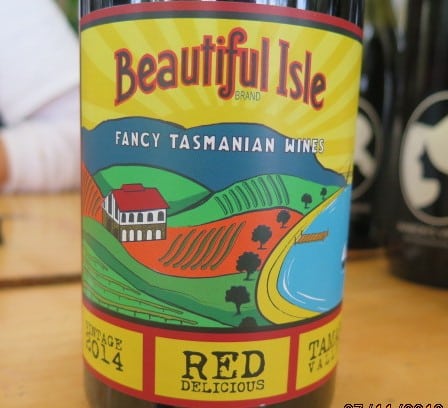
I loved Cynthia Semmens & her husband Dave Feldheim’s retro-labels for their Beautiful Isle White and Red Delicious. Not golden [delicious], emphasised Semmens (as in not natural), but nonetheless picking up on the island’s other moniker – “the Apple Isle.”
The label is based on original apple crate labels which the winemaking couple discovered in an old apple shed on Semmens’ parents’ property – Marion’s Vineyard. It is the fruit source for the label of that name started by mum (Marion, a Cypriot) and dad (Mark, a Californian), as well as Beautiful Isle. Semmens (ex-Hardys) and Feldheim (ex-S C Pannell) make both.
Despite the “Fancy Tasmanian Wines” tag, Beautiful Isle White and Red are entry-level (AUS$22) blends of what’s left over having made the Marion’s Vineyard portfolio. Clever, on-trend entry level wines mind. Tassie fresh with added texture, these vins de soif are made from an idiosyncratic co-fermented array of varieties.
Beautiful Isle White Delicious 2015 (Tamar Valley) has the clarity and crunchy acidity which brings Tasmania to mind, but it’s refreshing to see this filtered through a blend of grapes as opposed to a single more overtly varietal/fruit-focused wine. It is textured, dryish, perfumedish with a crunchy apple character. The principal varieties are Riesling, Pinot Gris Sauvignon Blanc and Chardonnay; I reckon there’s some Muller Thurgau, Brown Muscat and Traminer here too.
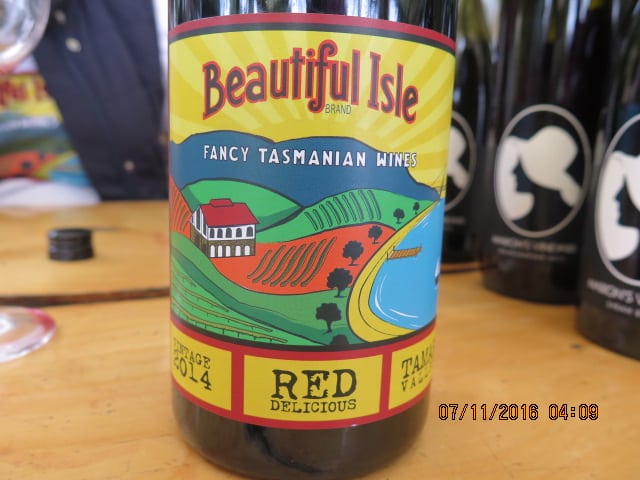
As for Beautiful Isle Red Delicious 2014 (Tamar Valley) it’s a fun blend of predominantly Cabernet Sauvignon (53%, Pinot Noir (40%) with splashes of Merlot Shiraz and Cascade. It shares the freshness and clarity of the white with its bright and juicy plum skin and coal dust edged black fruits. 13.5%
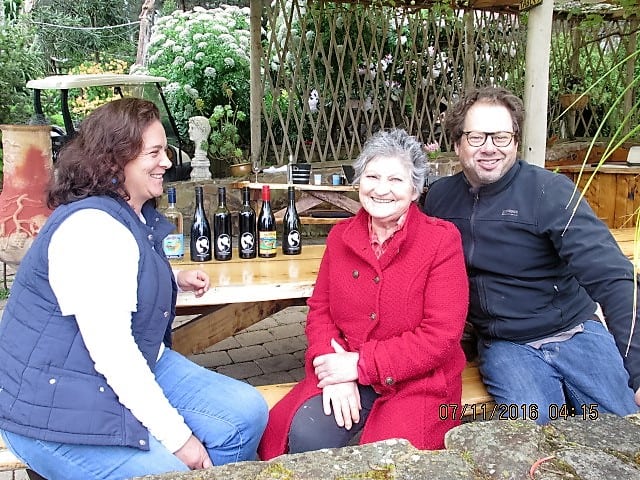
Turning to the vineyard’s principal label there’s no shortage of interest here thanks to Marion’s and Mark’s adventurous spirit. They didn’t hold back after they acquired the vineyard in 1979. And why not – Marion told me her family had 5000 years of experience growing grapes and making wine, so I reckon Marion’s Vineyard Mavrodaphne 2015 is a great tribute to that heritage. The family reckon the grape came in a ‘gum boot [smuggled] clone’ in the 60s – the island has a small Greek community. Originally it was made into a sweet wine, but Kim and Tennille Chalmers encouraged them to make a dry wine which Press in Melbourne went mad for. Lightly pressed with large berries and thin skins, it makes for a gently spicy, pithy, dry, textural red with a ruffle of tannins which firms up on a savoury finish; but it has the juice to keep pushing nicely along. Lovely freshness. 12.7%

In wine terms at least, producers can expect to look on the bright side of life thanks to Tasmania’s abundant natural acidity. It’s not the reason why Joe Holyman (Stoney Rise, Peter Dredge (Dr Edge/Meadowbank) and Mike Bennie (wine writer) chose this name for their skin-fermented natural wine range. But I must say it’s the brightness – freshness and fruit – which endeared these little half bottles to me.
Brian Riesling 2016 is yellow gold, with honeyed apricot and a textured finish – a firming nip and tuck from skins not acid. (It still has nice acidity). A tiny percentage of the Riesling was fermented on Chardonnay skins in puncheons with no adds. 12.5%
Brian Field Blend White 2016 is a cheeky blend of Riesling and Pinot Gris with a splash of Chardonnay and some Gruner Veltliner lees. Like the other Brians, it has a sweetness of fruit to the mid palate and a light tannin backdrop. Nice lift here with floral/dried herb Campari notes, rhubarb and custard and a spicy textural finish. Fruity persistence.
Brian 3 by Pinot 2016 has roughly a third each of Pinot Meunier, Pinot Gris and Pinot Noir. The Meunier undergoes carbonic maceration for 2 weeks, while the Gris and Noir are de-stemmed and fermented on top of the Meunier (whole bunches). It spent a month on skins and shows gentle red fruits, with subtle texture and line. Pretty and persistent.
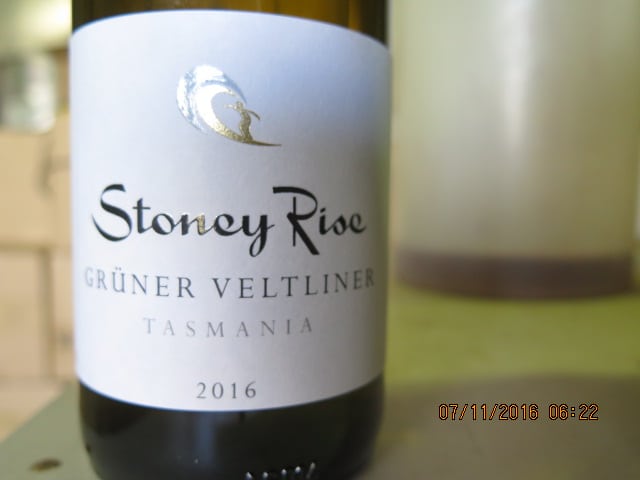
I remember looking at Holyman’s Gruner Veltliner vines at the Stoney Rise vineyard when I last visited him in 2012 (since then, incidentally, he has planted 1000 vines of Trousseau – he reckons Australia’s biggest planting). Stoney Rise Gruner Veltliner 2016 is the first vintage of which he has had enough volume to bag press it rather than use a basket press, with dividends for freshness, says Holyman. With its vegetal flavour profile and dry textural palate it has got good varietal character. Tassie freshness makes for good palate presence without heaviness. 12%

Stoney Rise Pinot Noir No Clothes No SO2 2016 does what it says on the tin – no added sulphur here. Holyman says he wanted to show you can make a clean wine and sulphur free doesn’t mean cloudy. This wine has nice crunchy red fruit, crisp acid and a touch of milk/catering chocolate. Mission accomplished.
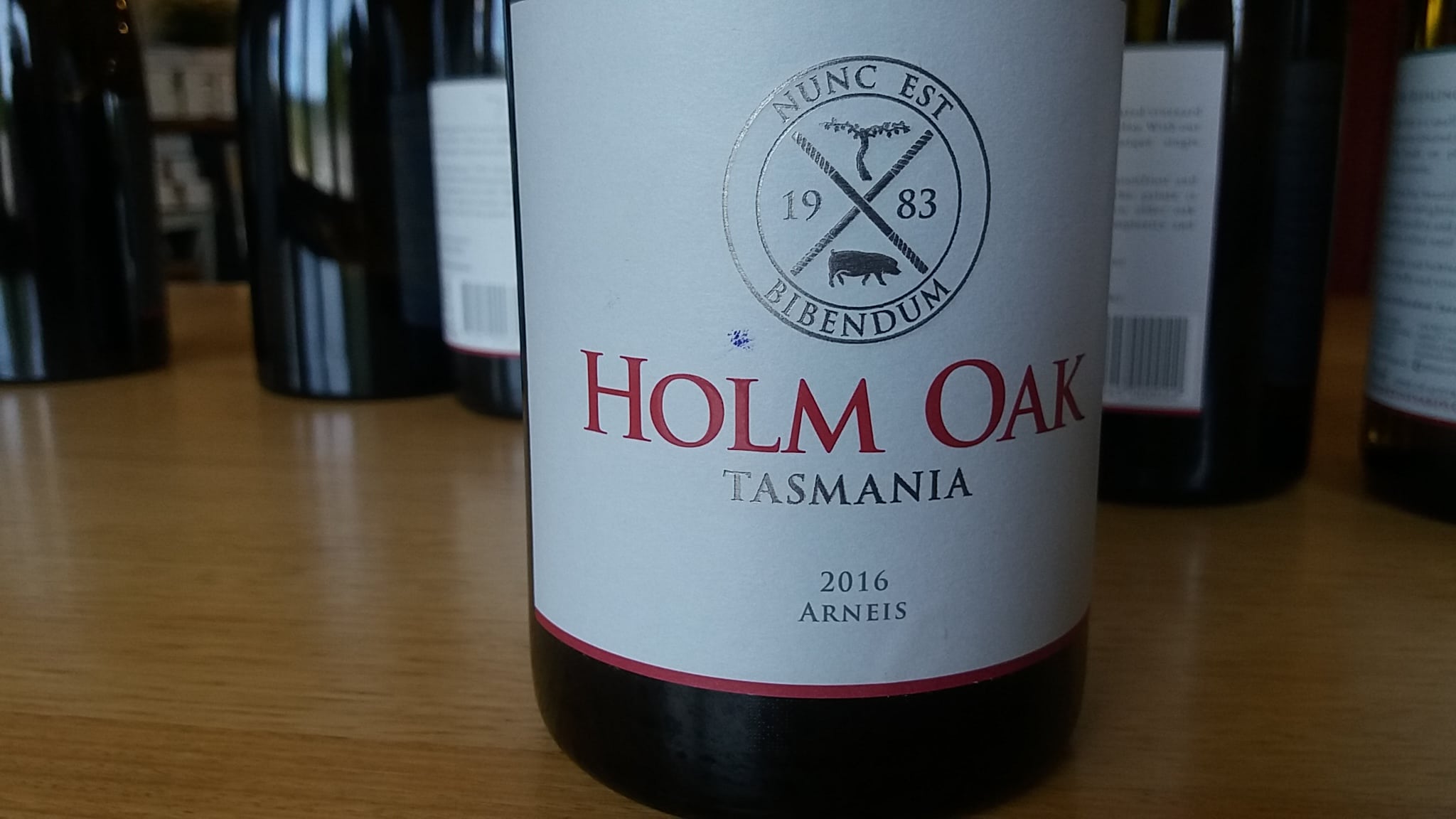
Having tasted a fair few Arneis at The Australian Alternative Wine Show, it was interesting to see an example from Tasmania. Like those I tasted at the show, this pale, subtle white had good varietal character with its lingering aniseed florals. But add to that a strong sense of place. From vines planted in 2007 on a peninsula, Holm Oak Arneis 2016 has taut acidity, a splash of sea spray and a crisp finish. Winemaker/proprietor Bec Duffy wild ferments it in tank and concrete egg (20%) with some solids to build a little texture. It’s good for 5-7 years she told me. 11.5%

When I last visited Sinapius, Vaughan Dell and his wife Linda Morice made a Riesling from bought in fruit in addition to a home grown Chardonnay and Pinot Noir. Since then the focus is very much on estate fruit, where varietal changes have been afoot. For reds, Gamay (which seems to perform very well in Tasmania) has been planted. I tasted a 2016 barrel sample – “more Loire-like than Beaujolais” said Dell (not the first to say this), who intends to blend it with Pinot Noir.
Returning to the whites, Dell explains “I was looking at a vineyard blend – – piecing together the percentages – focused on Riesling and Gruner Veltliner. But not knowing what it would be like, by planting a bit of everything else, I hedged my bets.” Sinapius Clem Blanc 2016 (Pipers River) is a field blend of Gruner Veltliner, Traminer, Pinot Gris, Pinot Blanc and Riesling.
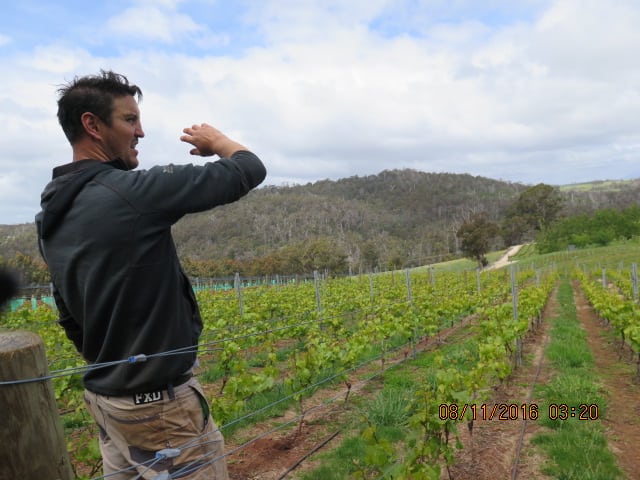
I reckon Dell is as good at hedging as he is as pruning – check out that immaculate vineyard. Clem tickles the palate in different ways – with its chalky, incipiently waxy texture, tingly, persistent acidity, yellow plum and satellite timing Gruner pepperiness – the lift in the tail. The Riesling keeps it precise. The blend plus winemaking make for an entry level white which is textural and spicy rather than fruity. It was mostly whole bunch pressed and wild co-fermented in stainless steel tank or puncheon. A couple of puncheons went through malo and it spent five months on lees. 12.5%
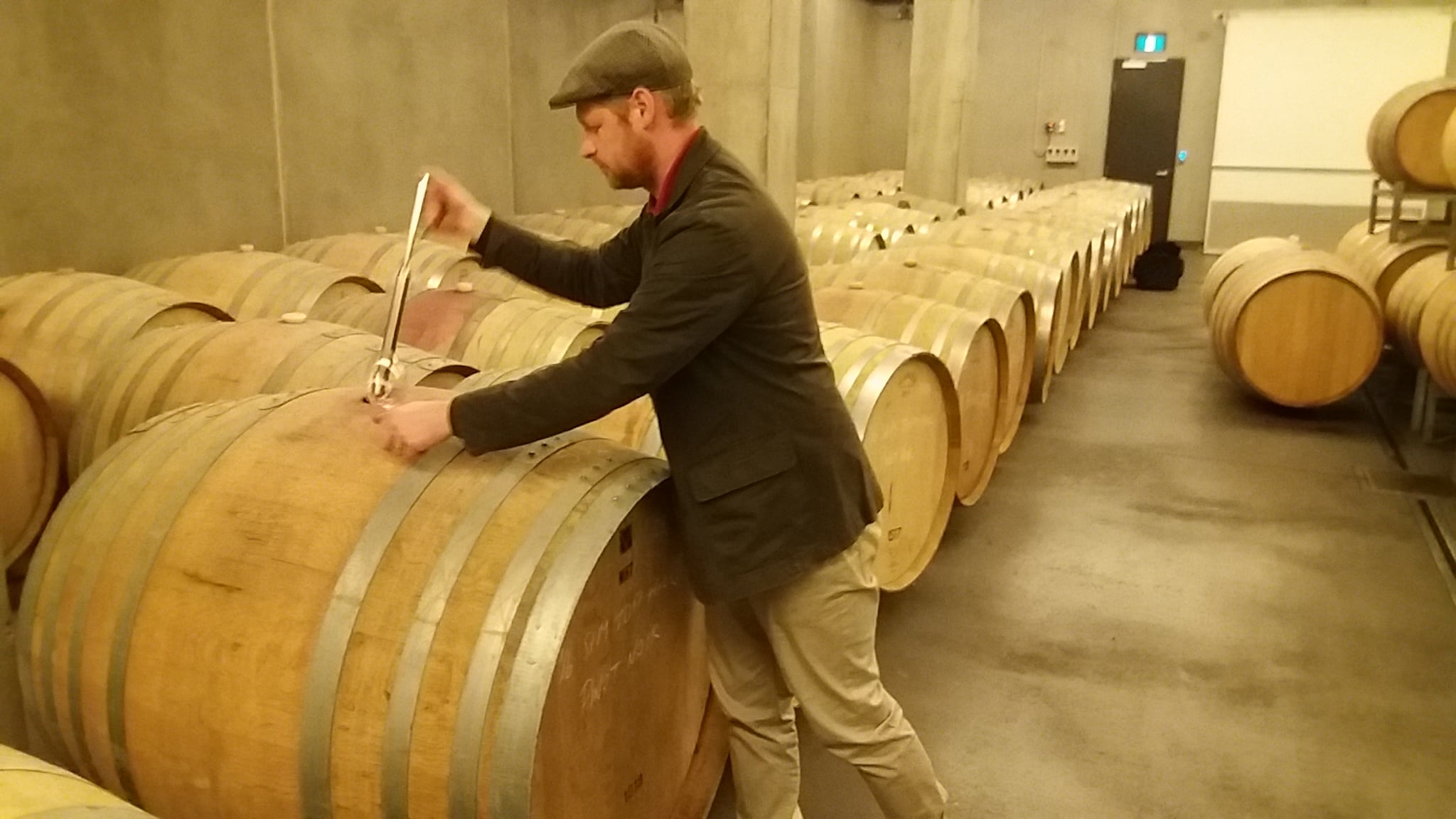
Moorilla’s Conor van der Reest (pictured below) is a cerebal winemaker. The producer’s flagship Cloth Series White and Red are, he explains, the equivalent of a reserve “but we couldn’t single out a single variety.” Rather the aim is “to show notions of all the varieties, but with nothing dominating.”
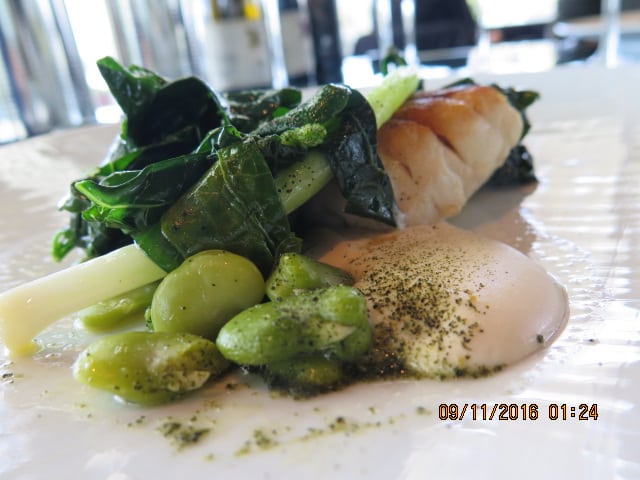
Moorilla Cloth Series White 2013 is firm, dry, initially quite austere even, but with floral lift and interesting texture (some skin contact here) and spice. Like the Clem, Riesling brings citrus fruit and drive, whilst the other varieties sound different notes – texture, spice, stone fruits – which I suspect will reveal themselves with time in glass. After a swift tasting, it paired well with this substantial fish course in the Mona Art Gallery restaurant (which is under the same ownership). Cloth Series White was aged for 15-16 months in barrel (just one – that’s all that was made). The 2013 Cloth Series White is a continuous co-ferment of 21% Sauvignon Blanc, 19% of each of Chardonnay and Gewurztraminer, 16% Riesling, 13% Pinot Gris and 12% Pinot Noir. It was matured in French oak for 14 months, which lends structure and poise.
Unlike the white, the red varietal components of Moorilla Estate Cloth Label Red 2013 were vinified separately (with a whole berry and stalks component). The white grapes were back blended after the red blend had seen a year in barrel. For van der Reest, doing this “allows the Pinot Noir tannins to talk with the Cabernet Sauvignon tannins, tightening them together.” In 2013, Cloth Label Red is a blend of 35% Pinot Noir, 29% Shiraz, 19% Cabernet Sauvignon, 10% Cabernet Franc, 8% Riesling. For a ‘Reserve,’ it is an under-stated wine, with yielding tannins – just a light touch of plum skin texture. So it’s ready to go right now. A charmer with lovely soft, juicy plum skins, riper, more concentrated but silky blue fruit notes with lift peppery and floral notes.

Stefano Lubiana was one of Tasmania’s pioneering boutique producers. And his pioneering work continues. He is in the process of planting Malvasia Istria and Malbec, while his Nebbiolo has been grafted over to Gruner Veltliner. Lubbaiana told me it’s a prolific yielder – “we cut a lot of fruit off, or it would be very anaemic.” Lightly citrus with vegetal notes building as you go through, Stefano Lubiana Gruner Veltliner 2015 has nice contrast of pith and juice. A saline note to the finish adds a Tassie note. It lacks a bit of definition yet but is certainly true to type. I liked the phenolics which, observed Lubiana, are a function of the vineyard as well as variety. So far this is a wine club/cellar door exclusive.
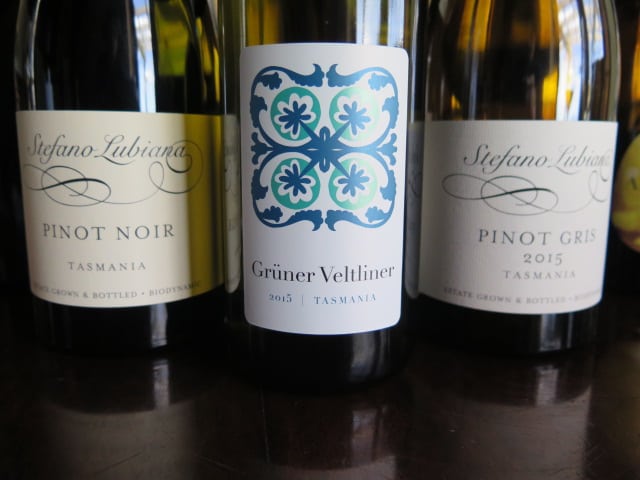
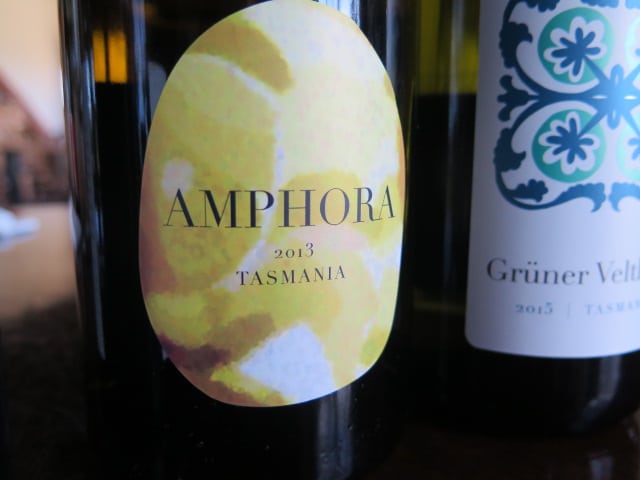
Amphora is where Lubiana plans to put the Malvasia Istriana (the 2014 & 2105 Amphora wines were both Chardonnay/Sauvignon Blanc blends). Stefano Lubiana Amphora Riesling 2013 was picked fairly ripe then fermented on skins in amphora for a couple of weeks before being transferred to a puncheon. It’s a immensely characterful, powerful Riesling – golden, with a chalky texture, really interesting spice (curry powder), herb (lemon balm) and citrus (kumquat peel) to the palate which has an exciting sense of compression. There’s more to come yet. The finish is long and involving thanks to pronounced pithy acidity – a sweet fruit (tangerine?) pith.
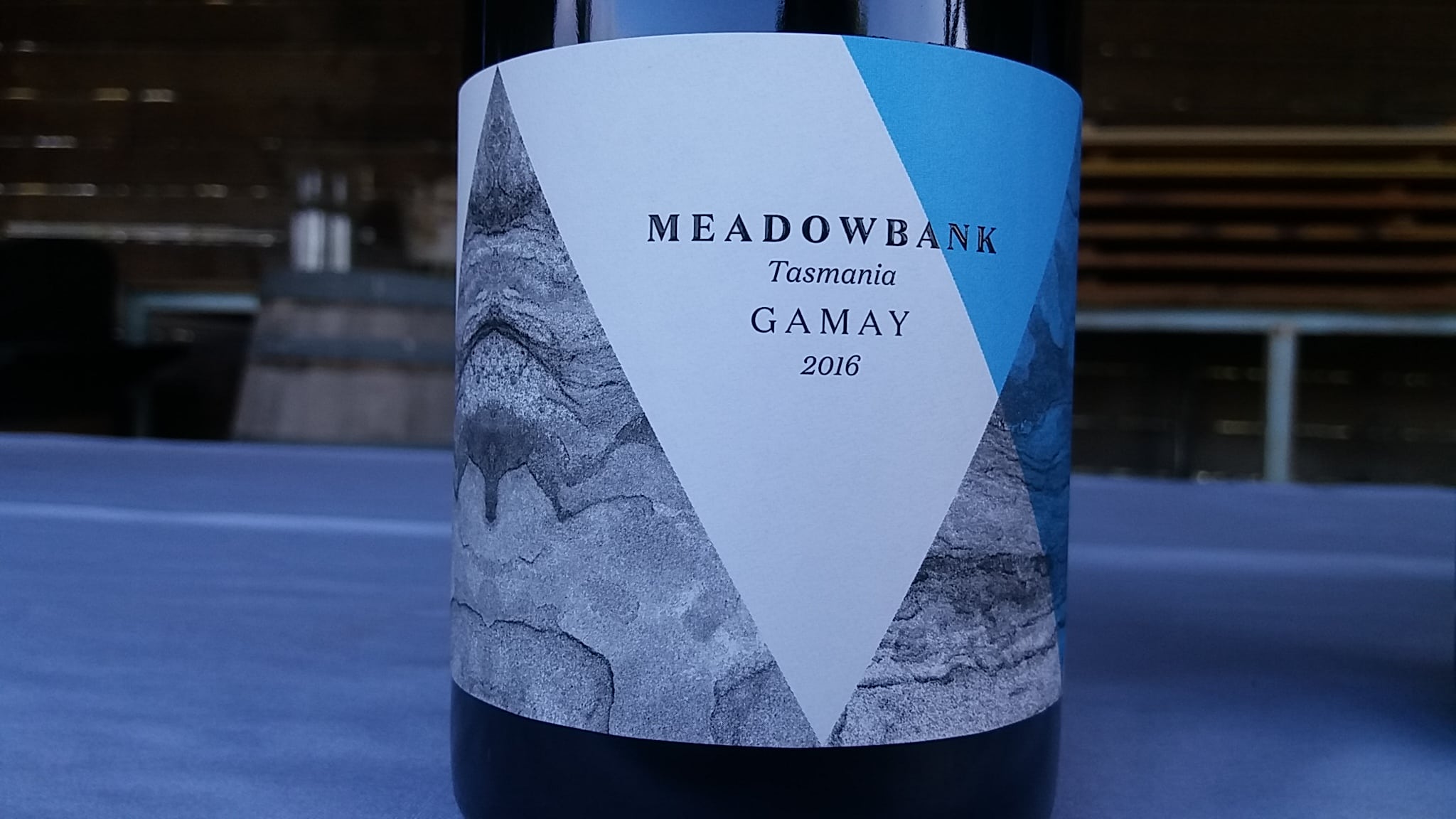
Gamay is popping up here and there across the island (and mainland). Meadowbank planted it some years ago – a bottle from the early 2000s (no label) had terrific fruit intensity and freshness. New plantings have just gone in. Meadowbank Gamay 2016 comes from the original 1998 plot at this acclaimed, very beautiful vineyard in the Upper Derwent Valley. Inspired by Beaujolais, winemaker Peter Dredge put this wine through 100% carbonic maceration and pressed all 800kg of it early into a puncheon and a barrique. It’s a deep, vivid hue with a bright pink rim and edgy nose and palate awash with peppery, peony notes. Very lifted. The fruit (red) is silky, with just the lightest touch of grip. Lovely acid drive. Very drinkable. $30
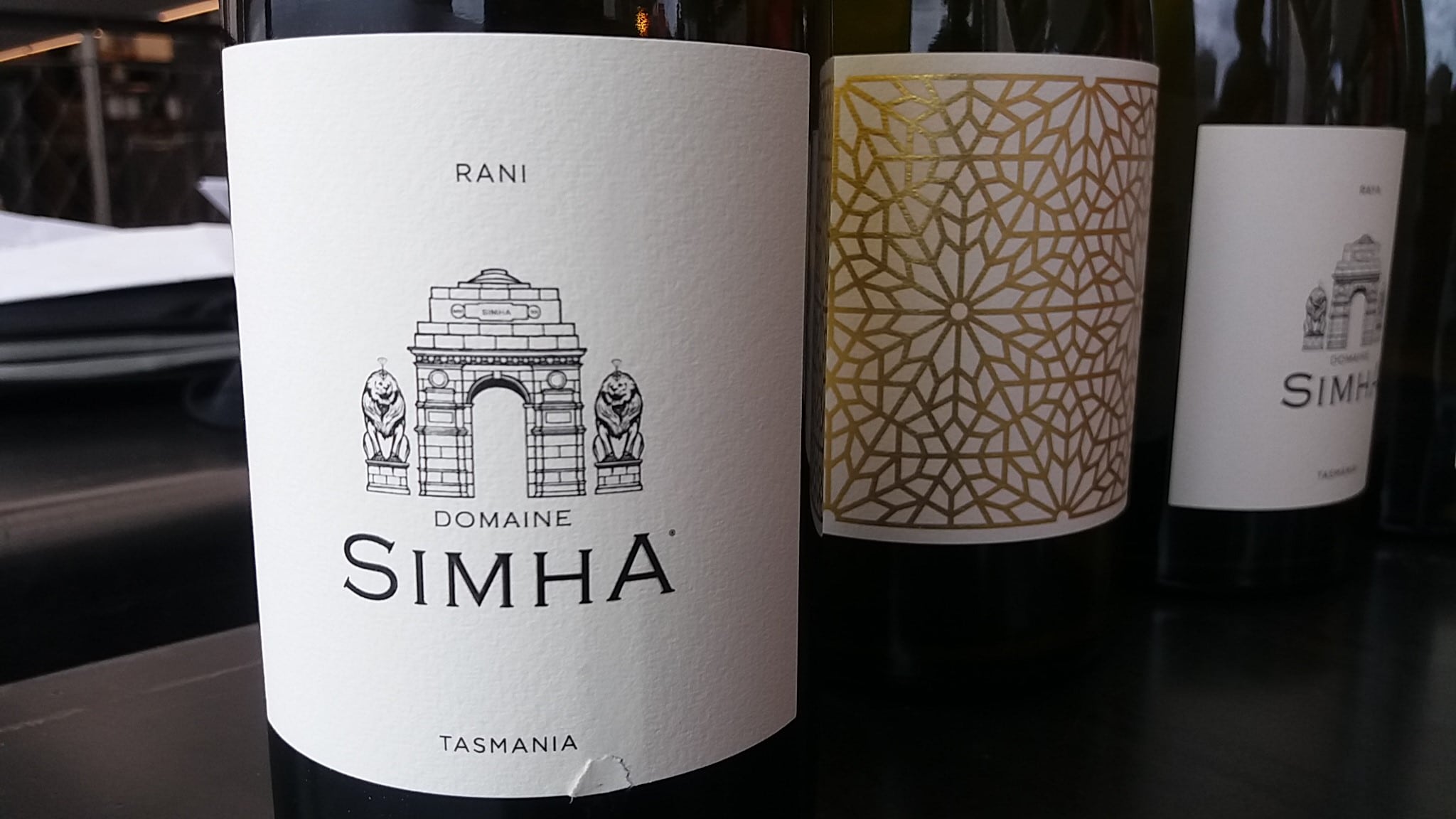
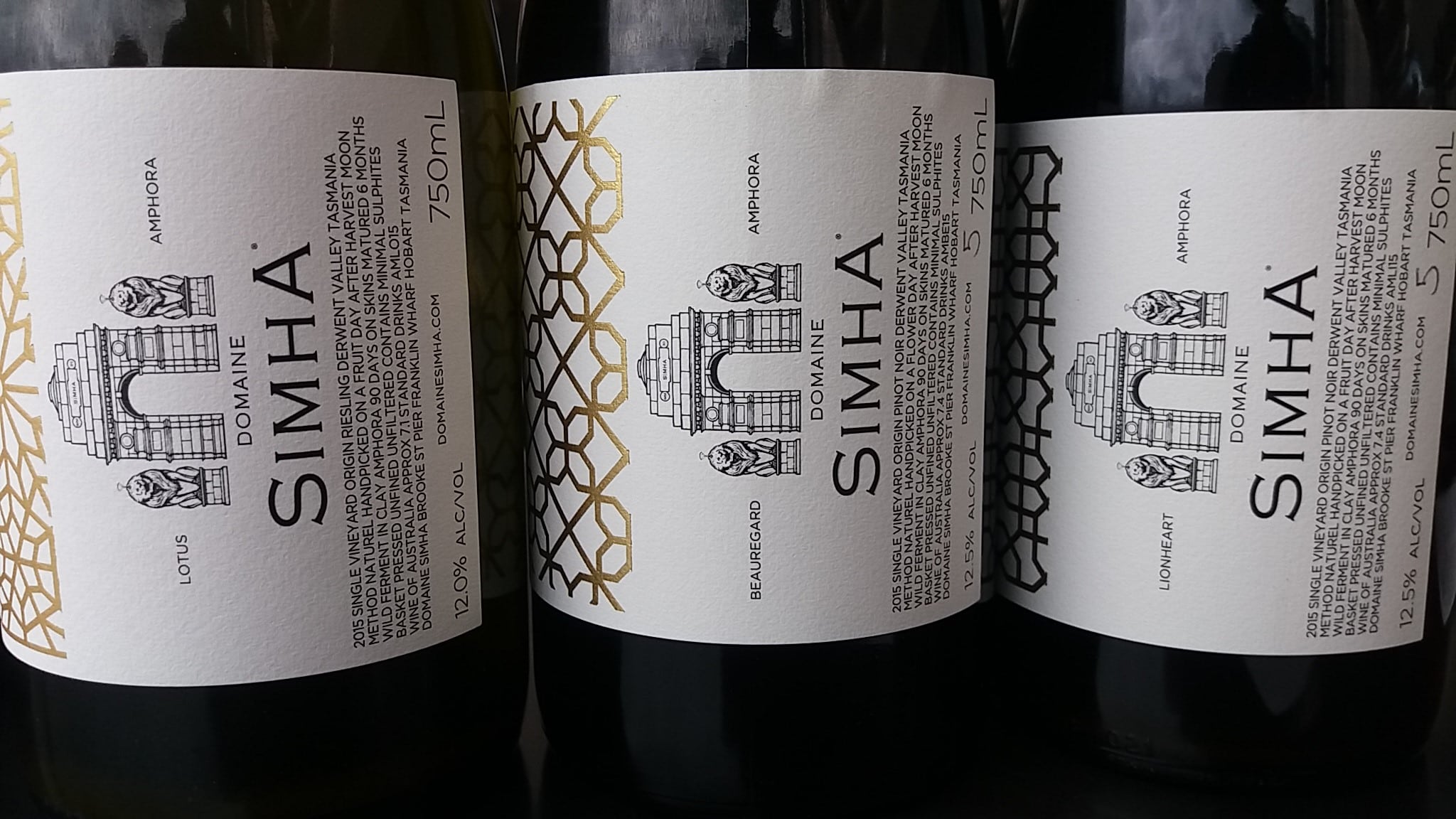
Nav Singh and Louise Radman of Domaine Simha primarily source their fruit from the Meadowbank vineyard; they are also fans of Gamay which fits well with their emphatically fine framed, yet textured, perfumed wines. Singh is an advocate of skin contact and whole bunch and, with the lightest of touches, I must say his use of both techniques is masterful. The couple made their first wine in 2013 so I’d not encountered their wines before, but I could well see why Dinner by Heston Blumenthal in Melbourne were quick to list them.

At the Hobart cellar door on Brooke Street Pier, Franklin Wharf.
As soon as it started to (naturally) ferment, Domaine Simha Rani Riesling 2014 was pressed off skins into demi-muids and, as you might expect from the skin contact and over a year on lies (no batonnage), it’s a very textural Riesling, with soft, bruised apple/apple sauce and grapefruit. Very different from anything else I’ve tasted from Australia, it’s salty/saline, gentle but very persistent with a long, sucking stones, mineral finish and firm (but not hard, artfully disguised) acid backbone. As with all Singh’s wines it unfolds and builds intensity, drawing you back to the glass, where it reveals tangy, pink grapefruit and talc notes. A reflective Riesling. 11.5%; its 6g/l residual sugar is worn lightly.
Domaine Simha Lotus Amphora Riesling 2015 is from the same vineyard, but is harvested slightly later and was fermented and aged for 100 days on skins in white and terra cotta small amphorae. The time on skins adds fresh ginger and spicy, pithy characters to its charge of grapefruit and more limpid lemon barley water. The skins are subtle and, with no astringency, in no way interrupt the delicious flow of this wine. Rather, as Singh puts it, “the phenolics are always very succulent and salivating.” As it opens up in glass it reveals pretty lychee and talc notes – lovely floral lift; the fresh ginger becomes more emphatic too. Terrific.
Singh and Radman have made a Gamay from day one. Sourced from four rows of Gamay in the Huon Valley, Domaine Simha Gamay 2016 is very floral, with a coal edge to its violets and spicy (whole bunch) threads to its dark fruited, inky, mineral-sluiced fruit (picked in May and never more than 11.5 baume, Singh observes it’s more connected with the Loire).
Domaine Simha make two Pinot Noirs from the same vineyard and clone (114), one harvested on a flower day, the other on a fruit day. Domaine Simha Beauregard Amphora 2015 (flower day) was fermented with 100% whole bunch for 3 months in amphora, then pressed and aged for another 6-8 months. Neither cuvee see any oak. It has a stemmy nose with carbonic peony lift and a textural, very subtle palate. Delicious fruit tannins here – a little slippery, all soft skins/pulp, the palate flecked with dried sweet spices and sluiced with minerals and red cherry fruit. Ultra fine and perfumed, very long and seductive, it has incredible intensity and delicacy both – uncommon levity.
As for the other cuvee, it could not be more different. If I didn’t know, I’d have guessed it was made from the MV6 clone. The tannins of Domaine Simha Lionheart Amphora 2015 are denser, the fruit darker and this wine already reveals earthy mushroom notes (all within a delicate frame). But it finds the fruit too. Coltsfoot/aniseed riffs emerge on a spicy, pithy finish. Very good and thoroughly intriguing alongside Beauregard. When I blended the two, the outcome was a more conventional, if less interesting wine.

Since I last visited with Nick Glaetzer he has been playing around with Chardonnay and Pinot Noir to fun effect for his entry level wines. Glaetzer Dixon Sixteen Chardonnay 2016′s yellowish hue points to an oxidative, nutty, slightly aldehydic style a la Jura. It’s spicy and chalkily textured with green almond and some yellow plum fruit sweetness going through, neatly balanced by good acid drive. It was fermented with a Riesling yeast and aged sur lies for 6 months without sulphur addition. 13%

Glaetzer at his new Hobart tasting room – very Bohemian (Rhapsody)
Although Glaetzer Dixon shamelessly admits Glaetzer Dixon Sixteen Nouveau 2016 is a rip off of Beaujolais, it is made from Pinot Noir – a sparkling clone, 80% coming from White Hills in the Tamar Valley. It underwent a full carbonic maceration and, after 8 weeks, 50% was destemmed. It finished the ferment on skins to extract a bit of tannin. An enticing nose sports lifted, delicate strawberry fruit, while the palate is surprisingly creamy. But the whole bunch and time on skins counter balances the sweet fruit, providing backbone and a tease of spices, which extend the palate.


Recent Comments
Hi Sarah, Thanks for this great post! Reading your reviews makes me happy that I have a few bottles of (the regular) Noval from 2015 onwards!! All
Thanks for the suggestion. I know Lance Foyster quite well. However I have just found the Wine Society are now listing an Encruzado for £15.50