
Portalegre, Alentejo: old vines, old wines
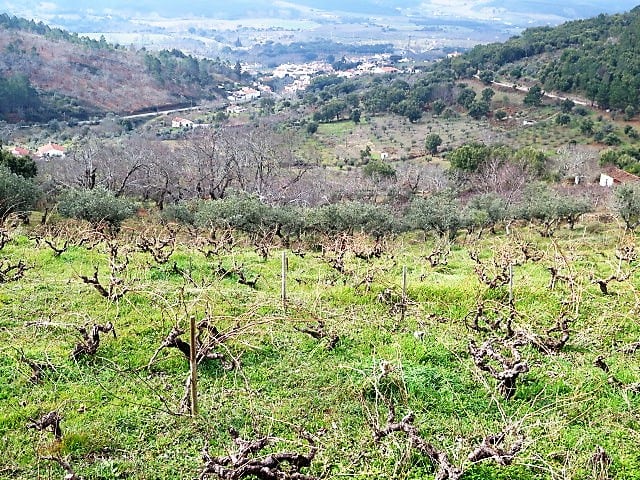
Terrenus Vinha da Serra – Alentejo’s highest vineyard at 760m
I’ve been excited about Portalegre since my first visit in 2009. For me, it’s not just about this elevated region’s cool climate (pictured, the region’s highest vineyard at 760m), it’s also about its aged vines – field blend (varietally mixed) vineyards. Factors which markedly differentiate Alentejo’s northernmost region from pretty much the rest of Alentejo.
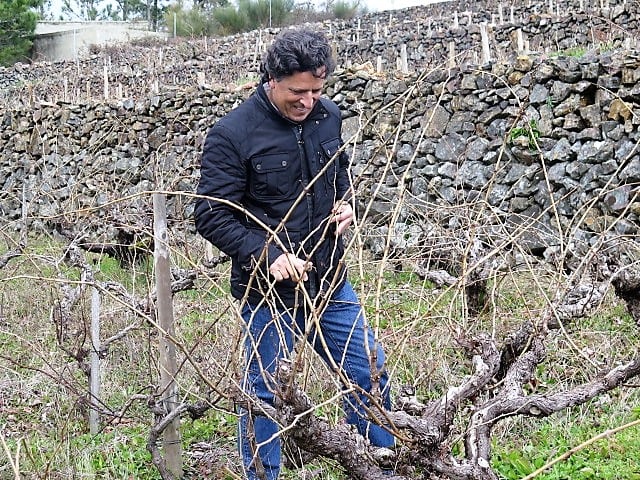
Rui Reguinga reckons Vinha da Serra is Alentejo’s only terraced vineyard
I’m travelling all week so, for now, here are some more pics to share with you to lift this unique Alentejo sub-region off the page – its altitude, greeness and aged vines.

Shining fresh light on Portalegre’s old vines – Susana Esteban

Polyculture – not just a mix of grape varieties – expect to find fruit, nut and olive trees in Portalegre’s aged vineyards

And sheep at work – ‘pruning’ the olive trees at Cabecos do Regeungo; apparently they don’t touch the vines

For propagation: old vine cuttings at Cabecos do Regeungo, with Joao Afonso
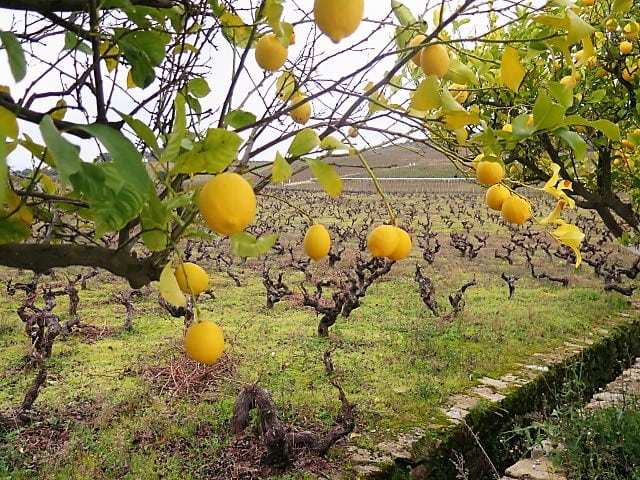
Lemon trees at Tapada do Chaves
Plus, with many thanks to João Afonso (Cabeças do Reguengo) and Rui Reguinga (Terrenus), it’s been a real thrill and privilege not only to catch up with Portalegre’s cutting edge wines, but also mature classics from the co-operative (where Reguinga cut his teeth, under João Portugal Ramos, no less) and Tapada do Chaves. My picks of the bunch pictured with notes to follow on classic and cutting edge Portalegre wines.

Adega Co-operativa Portalegre flight: 1989, 1990, 1991, 1992, 1997
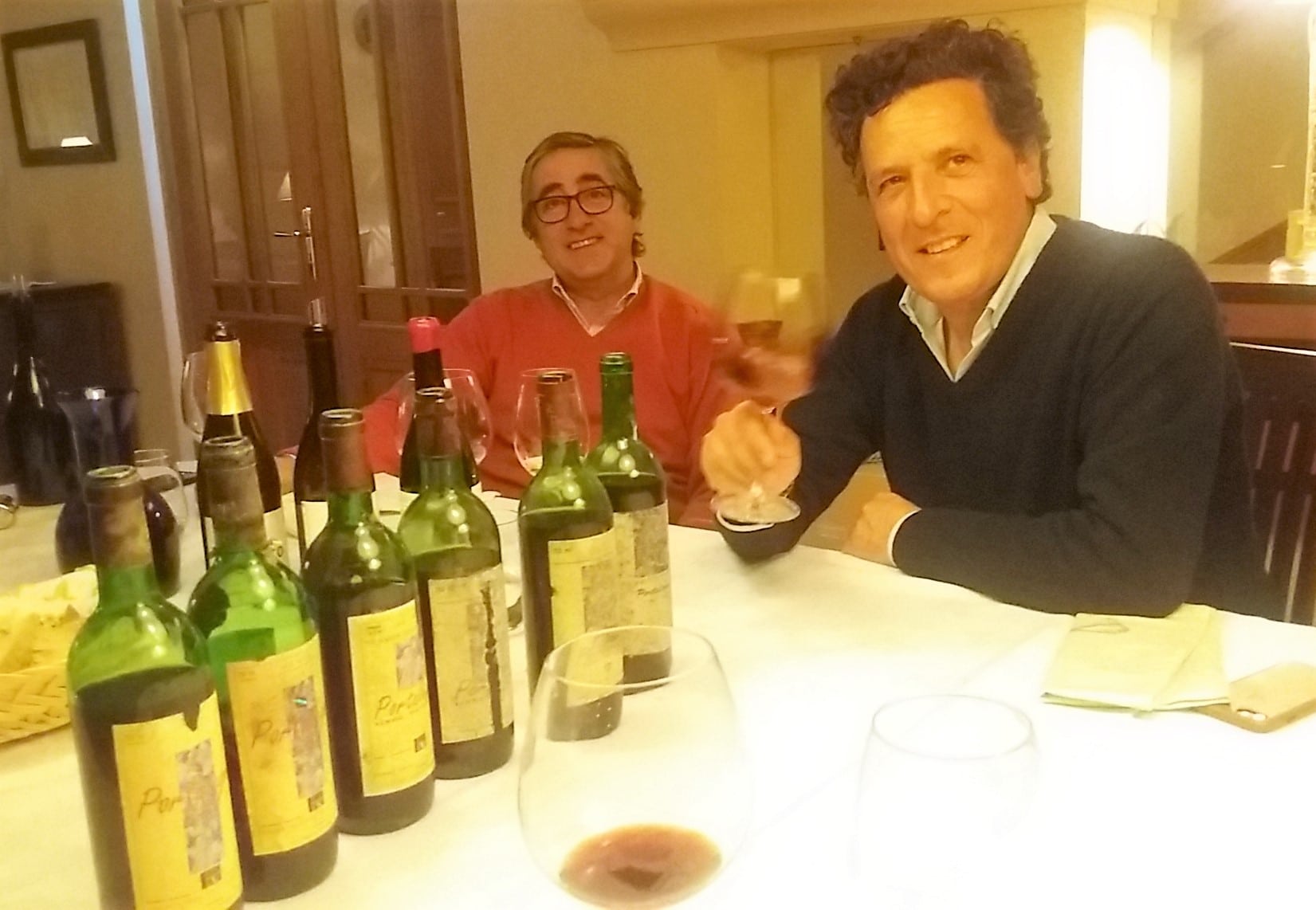
Oh yes, the 1989 – by consensus the wine of the flight

Tapada do Chaves White 1996 – still wonderful balance, persistence (1977, 1985, 1996, 2000 tasted)

The 1977 – so lifted, complex, fresh, so persistent – drinking it this evening as I write & still so intense – my pick of the 2000, 1999, 1996, 1988, 1986, 1977


Recent Comments
Hi Sarah, Thanks for this great post! Reading your reviews makes me happy that I have a few bottles of (the regular) Noval from 2015 onwards!! All
Thanks for the suggestion. I know Lance Foyster quite well. However I have just found the Wine Society are now listing an Encruzado for £15.50