
Elderton Command Shiraz vertical
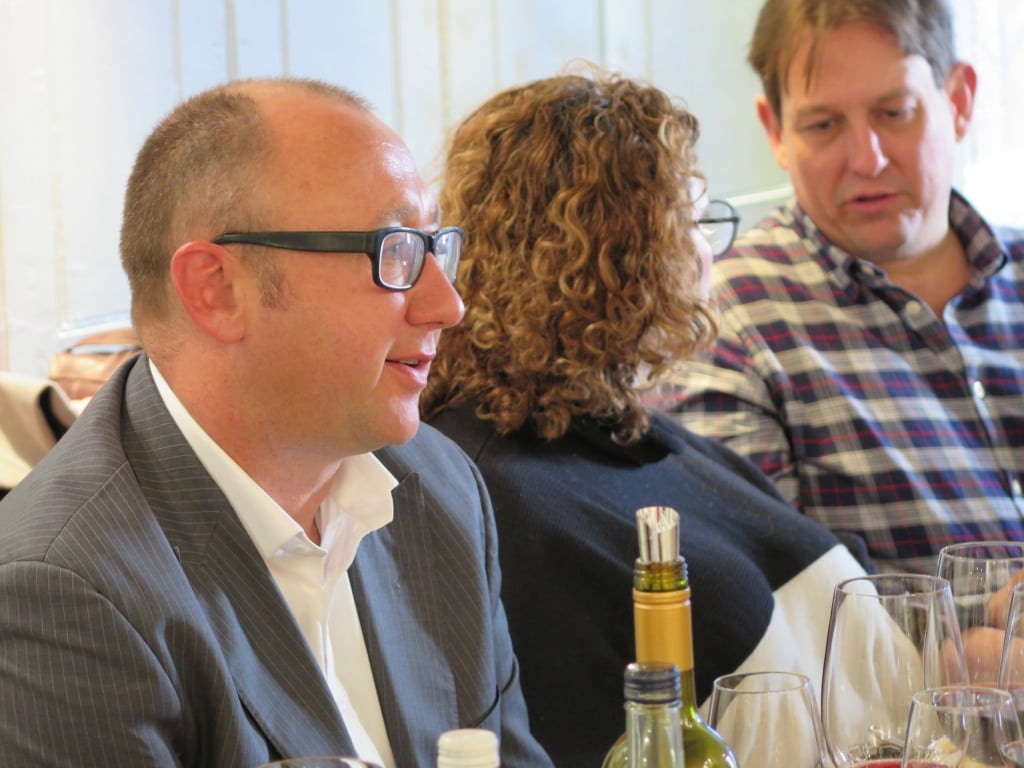
The Australian wine industry is blessed with great raconteurs. Elderton’s Cameron Ashmead is one of them. In London at the end of last month to celebrate the 120 year anniversary of the Command vineyard (which was initially planted around 1894), we were treated not only to a mini-vertical of Elderton Command Shiraz, but also an insight into his late father Neil’s first winemaking adventures in Saudi.
Yep Saudi as in Arabia. He assured us that the family has never since sought to make wine from supermarket table grapes. No need when his parents acquired 72 acres of prime Barossa dirt with vineyards for free with their “Nuri” (Nuriootpa) homestead in 1979.
Of course back then old vine Shiraz wasn’t even going for a song. Rather the government’s kneejerk response to an oversupply was to pay growers to grub it up. I’ve even read that Shiraz went into muffins (Barossans do like their baked goods…).

Fortunately, the Ashmeads did not succumb to grubbing up grants or muffin mania. In fact, having initially sold the grapes, by 1982 they started to make estate wines. The first vintage of Command Shiraz was made in 1984, when it was known as Command Hermitage. Cameron reckons France did Australia a favour when it objected to the use of Hermitage “because we virtually own the Shiraz variety” – touché!
The wine has been made every year except 1989 and 2011, which were poor years. Nor was it made in 1991, a very good year. Why (and older brother Allister is probably still asking)? So that the Ashmeads could send young Cameron to school (that year the Command vineyard Shiraz was blended into the much earlier released Elderton Estate Shiraz – much better for cashflow).
Originally, wines were made at Peter Lehmann’s winery (then known as Masterson Wines). Both the 1992 and 1998 Command Shiraz would have been fermented there in very large hoppers. Cameron reckons the fruit quality has since benefited from being processed at the family’s own winery in small open vats, which (see below) have recently been equipped with cooling elements.
Other changes over the years include shifting from 100% new American oak to around 65%, the balance being French*, bottling under screwcap (of our flight, save for the 2006 in magnum, the 2004 and following were bottled under screwcap), more lees ageing since 2008 (for richness without impacting on acidity) and, for about five years now, fermenting at significantly lower temperatures (20-24 degrees centigrade) better to preserve fruit. *All wines start off in new American & new French oak puncheons and are then transferred into older oak after about one year; they are bottle-aged for 12 months prior to release.
As for the Command vineyard, it is located on the banks of the North Para River on alluvial river silt soils over red and brown clays. It has a favourable east-west row orientation (which avoids the worst ravages of the sun) and is planted on a gentle slope rising from 170m to 275m. Cameron says the family spend “truckloads of cash” on the vineyard with lots of work by hand (all pruning and harvesting) despite measly yields (0.5 to 1.5 tons/acre).
 I am not sure if it was just in 2010 but, for that vintage of Command, Cameron mentioned that it was picked in different stages to build layers into the wine (both because of differing ripeness levels and use of different techniques). It has to be said, the 2010 was pretty special and, in line with a Barossa myth, of the younger vintages, the even years showed best.
The 2010, 2006 and 2004 were my stand outs of the flight but, with the exception of the 1992, big picture Command’s consistent energy and focus stood out. While the relative elegance and purity of the 2010 and 2006 struck a chord with my personal preferences, the meatiness and brooding spices of the warmer years – 2008 and especially 2004 – had great appeal too.
Here are my notes:
Elderton Command Shiraz 2010 (Barossa)
Good winter rainfall signalled the end of a very dry period; a mild year with a few hot weeks but harvest close to normal. Five small parcels were hand harvested over four weeks to attain complex nuances. It was fermented in open top concrete fermenters with chilled ferments, hand pump-overs and cap submerging with oak header boards for eight days; the process finished with barrel ferment and malolactic fermentation in new French & American puncheons and spent 30 months’ in oak. While paler and more approachable than I expected, mid-weight even, Cameron reckons this is one of the best ever made. Though youthful, it has beautiful balance, concentration and purity of fleshy plum and juicy blackberry – a sheer harmoniousness which will allow it to age most gracefully; biddable, not brooding Barossa. Shimmering sweet spices to the nose are much more deep-seated on the palate, darker too – not just star anise, but liquorice, which builds on a long, spicy finish with juicy persistence. Excellent; fabulous potential. 14.8%
Elderton Command Shiraz 2008 (Barossa)
A hot summer and early vintage. The 2008 was aged for 32 months in American and French oak. A deeper hue than the 2010 with savoury, earthy hints of engine oil/black olive, tar and a touch of blood to nose and palate. The mouth reveals concentrated spicy fruitcake and juicier blackberry fruit with lifted camphor and sweet mocha oak. Sinewy, quite robust, powerful tannins buttress the fruit. A bruiser with plenty of poke. 14.5%
Elderton Command Shiraz 2007, magnum (Barossa)
Frost and drought conspired to reduce yields by some 20%. This was aged for 32 months in American and French oak. Picked super-early I detect a tiny hint of greenness on the nose and, though full-bodied, the 2007 is pretty upfront with very juicy red berry and darker plum fruit, lifted spices and creamy mocha and cedar oak. Drinking very well now; not the concentration of the other noughties’ wines despite the low yields. 14.5%
Elderton Command Shiraz 2006, magnum (Barossa)
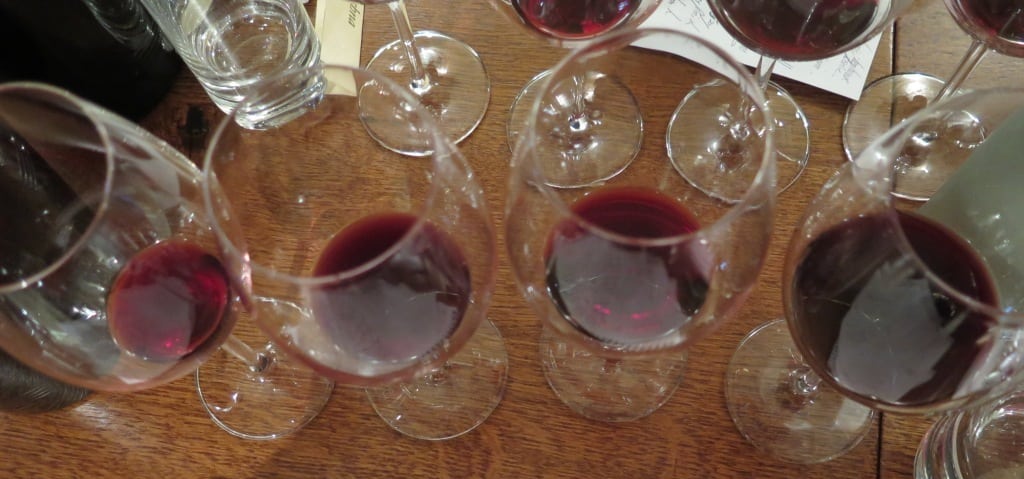
From left to right Elderton Command Shiraz 2010, 2008, 2007, 2006
With good winter rainfall and a dry but warm summer and cool February, a late, outstanding vintage. The 2006 vintage was aged for 34 months in American and French oak. This wine has a very deep hue and is youthfully well-structured with a delicious ruffle of tannins to its tight cassis, juicy, vibrant, tartly tactile plum skins and creamier black forest gateau black cherry and mocha palate. Terrific concentration with animation and layer. Plenty still to give. Outstanding. 14.5%
Elderton Command Shiraz 2004 (Barossa)
A mild January followed by a February heat-wave, then Indian summer. A very good year. The 2004 was aged for almost 3 years in American and French oak. Very expressive, really hitting its stride with delicious savoury dried herbs, spicy liquorice, engine oil/black olive, menthol and mocha notes. Though earthy and rich with panforte spice and dried fruit layers, the 2004 retains a still juicy, lively, peppery, very persistent core of fruit which, together with its sinewy, tapering tannins, brings great length and line. Terrific, with a great sense of place. Excellent. 14.5%
Elderton Command Shiraz 1998 (Barossa)
A dry winter but good spring rains. Apart from a week of 40 °C temperatures in late February, the vintage was mild with daily temperatures between 20 °C and 25 °C and cool evenings which resulted in a steady ripening of fruit. Picked in early March the 1998, which was made at Peter Lehmann’s winery, was aged for 32 months in American and French oak. An expressive nose and palate with plenty of mouthfeel reveals pronounced engine oil/black olive, tar, carraway and menthol notes to its dark fruitcake palate. Sweeter, creamy mocha oak and velvety tannins lend weight and impetus to the finish which resonates with liquorice and star anise spice. Long and involving if slightly less polished than the previous wines.
Elderton Command Shiraz 1992 (Barossa)
A highly regarded classic Barossa vintage; this was chosen by The Wine Advocate’s Robert Parker as one of the world’s Top 80 wines. The nose shows attractive development with earth, panforte, liquorice and leather but, in the mouth, this bottle at least is drying out. Toffeed oak rather than fruit sweetness dominates, the tannins are a touch rasping and a shorter, wandering finish lacks the energy and focus – the command – of the younger wines.


Recent Comments
Hi Sarah, Thanks for this great post! Reading your reviews makes me happy that I have a few bottles of (the regular) Noval from 2015 onwards!! All
Thanks for the suggestion. I know Lance Foyster quite well. However I have just found the Wine Society are now listing an Encruzado for £15.50